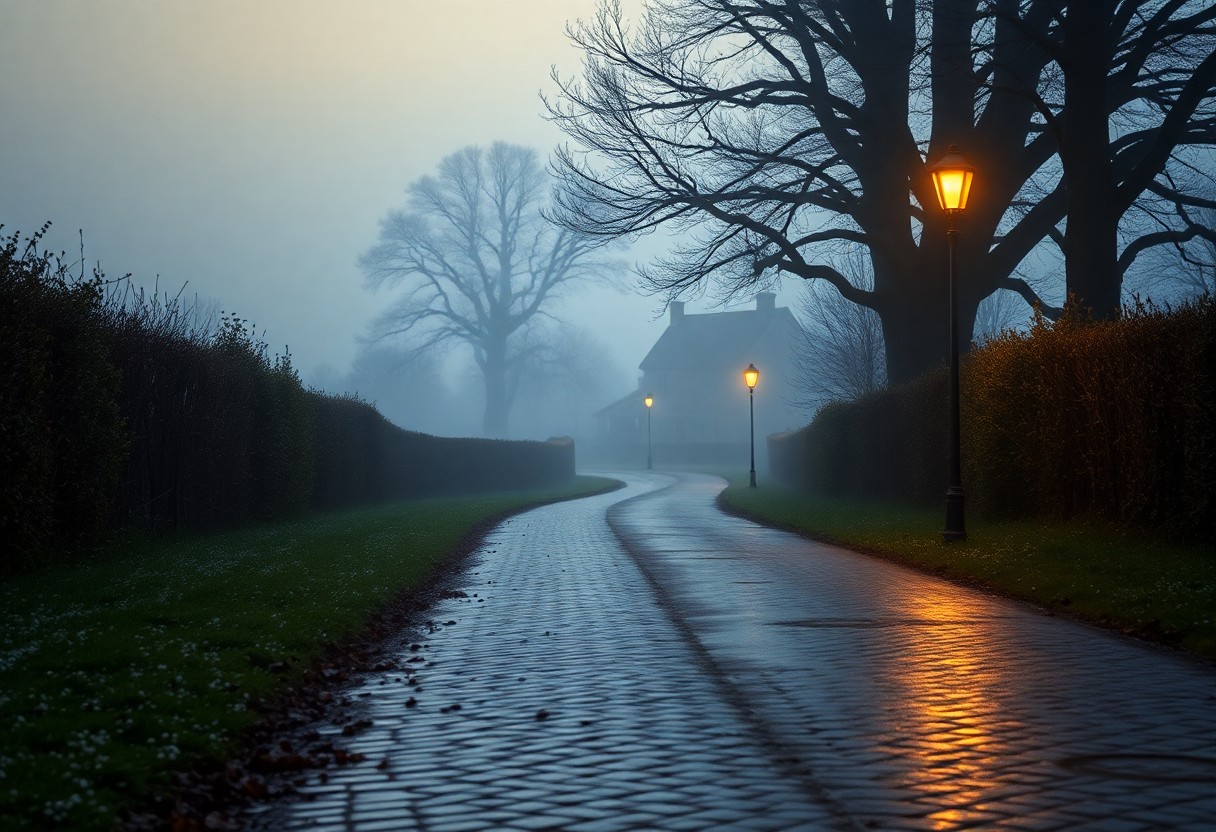
Mood in foggy mornings changes how you move: expect low visibility and heightened danger, adjust speed and lights, and appreciate the soft, muted light that sharpens contrasts and quiets the scene.
The Subtle Mood of Foggy Mornings
Within the classifications, you note how radiation fog blankets low ground after clear nights and how advection fog advances inland with moist winds; you must respect the dangerous visibility loss that alters travel and operations.
Consult the compact table below for quick contrasts and use the checklist to prioritize response when freezing fog or dense sea fog appears.
| Radiation fog | Forms overnight over land with calm winds; shallow but common. |
| Advection fog | Occurs when moist air moves over cooler surfaces; can extend miles. |
| Evaporation (steam) fog | Cold air over warm water creates low steam plumes and sudden visibility drops. |
| Upslope fog | Air forced up terrain cools and condenses; persistent on windward slopes. |
| Freezing fog | Supercooled droplets produce icing hazards on surfaces and equipment. |
- radiation fog
- advection fog
- mist
- haze
- freezing fog
Radiation and Advection Fog Characteristics
Night cooling encourages radiation fog near the surface while horizontal flow creates advection fog that you may find more extensive; you should expect slower clearing and plan for prolonged low visibility.
Distinguishing Between Mist and Haze
Visibility from mist comes from water droplets that scatter light, whereas haze is particle-driven and can reduce air quality; you ought to adjust speed and lighting when either appears.
This distinction matters because mist typically lifts with warming while haze can persist under stagnant air, so you should consider air-quality precautions when haze limits breathing comfort.
The Subtle Mood of Foggy Mornings
You watch how local air, ground moisture and calm winds shape mist, altering light and sound as pockets of humidity and subtle temperature shifts set the stage.
- Temperature gradients
- Humidity levels
- Wind speed and direction
Microclimates around you concentrate moisture in hollows and low spots, making fog appear with little warning. Knowing how wind, radiative cooling and surface moisture interact helps you predict where and when mist will settle.
Temperature Inversions and Dew Point Correlation
Inversion vs Dew Point
| Condition | Effect |
|---|---|
| Temperature inversion | Cool air trapped near ground increases condensation |
| Dew point close to air temp | Rapid transition to visible fog |
Inversions pin cool air beneath warmer layers, so you see moisture condense when the dew point nears air temperature, directly triggering fog formation.
The Role of Topography and Air Quality
Slopes and valleys funnel cooler air into low points, where you often encounter dense fog and reduced visibility that can be hazardous for travel.
Vegetation and urban surfaces alter evaporation and trap particulates, so you should note how airborne particulates serve as condensation nuclei, sometimes intensifying fog and raising health concerns.
Predicting Atmospheric Clarity: A Step-by-Step Guide
Quick reference
| Indicator | What to watch |
|---|---|
| Dew point spread | Spread ≤2°C → high fog potential |
| Relative humidity | Above 90% near surface → fog formation likely |
| Wind speed | Calm (<3 m/s) favors persistence; gusty winds disperse fog |
| Topography | Valleys trap cold air; ridgelines often clear |
Analyzing Local Weather Data and Humidity
You compare station obs, short-range models and the dew point spread to judge fog risk; a small spread between air temperature and dew point signals formation, while RH above 90% near dawn confirms persistence and reduced visibility hazards for travel.
Identifying Optimal Geographic Vantage Points
Scout nearby valleys and ridgelines to pick sites where cold-air pooling creates dense fog and higher grounds offer dramatic views above the inversion; avoid low roads where limited visibility and slippery surfaces pose danger.
Choose spots with safe parking and obvious escape routes, since slight wind or sun can dissipate fog quickly and leave you exposed; prioritize locations that give both shelter during approach and a clear perspective above the fog for photography or observation.
Consider timing your approach so you arrive before dawn, check local access restrictions, and plan for poor visibility on roads; arriving early also maximizes chances to witness the full transition as the sun lifts the fog into airy layers.
Essential Tips for Outdoor Safety and Photography
Stay close to marked trails; you should use a headlamp and high-visibility clothing to reduce risk from unseen obstacles and passing vehicles.
- Tell someone your route and ETA so you can be found if needed.
- Wear layered, water-resistant gear to manage moisture and cold.
- Protect cameras in drybags and carry spare batteries in a warm pocket.
Use a charged phone, whistle and a partner when possible; keep movements slow to avoid slips. This helps you remain visible and keeps your equipment protected.
Technical Adjustments for Low-Visibility Environments
Adjust exposure to avoid washed-out highlights-favor +1/3 to +1 stop-and switch to manual focus when fog causes autofocus hunts; you should bracket shots and shoot RAW to recover detail and mood.
Preserving Equipment in High-Moisture Conditions
Pack weatherproof bags and use silica gel packs to keep moisture from seeping into camera bodies and lenses; you should seal gear in drybags between shots.
Wipe exposed metal and lens elements frequently with a microfiber cloth, and avoid changing lenses in the open so you reduce the chance of internal condensation.
Store gear in warm, dry places after outings and allow items to acclimate in sealed bags before opening them; you can revive damp straps by airing and replacing silica packets when needed.
The Dual Nature of Low Visibility: Pros and Cons
You feel the pull of contrast: fog mutes detail and invites quiet, yet it enforces reduced visibility that alters how you move and decide.
Fog compresses distance and softens light, offering intimate moods while forcing you to slow and reassess routes to avoid hazardous encounters.
Pros and Cons
| Pros | Cons |
|---|---|
| Softens detail | Reduced visibility |
| Heightens mood | Travel delays |
| Simplifies composition | Higher accident risk |
| Dampens sound | Slippery surfaces |
| Adds privacy | Disorientation |
| Photographic opportunity | Equipment moisture |
| Sense of intimacy | Impaired timing |
| Eases visual clutter | Unexpected close encounters |
Aesthetic Benefits and Visual Simplification
Soft veils collapse clutter so you concentrate on silhouette and tone, letting you compose with simplified visuals that intensify atmosphere.
Navigational Challenges and Safety Constraints
Reduced sight forces you to adjust speed and spacing, making ordinary paths riskier and increasing the chance of collisions if you press on at usual pace.
Emergency responses become slower because you misjudge depth and speed, so you must use lights, signals, and conservative choices to mitigate serious accidents.
To wrap up
With these considerations you recognize how fog reshapes light, muffles sound, and alters scale, offering subtle moods that reward attentive observation. You can adjust photography, travel, or morning routines to match the slower pace and soft contrast. Embrace patience and you will find depth in muted scenes.