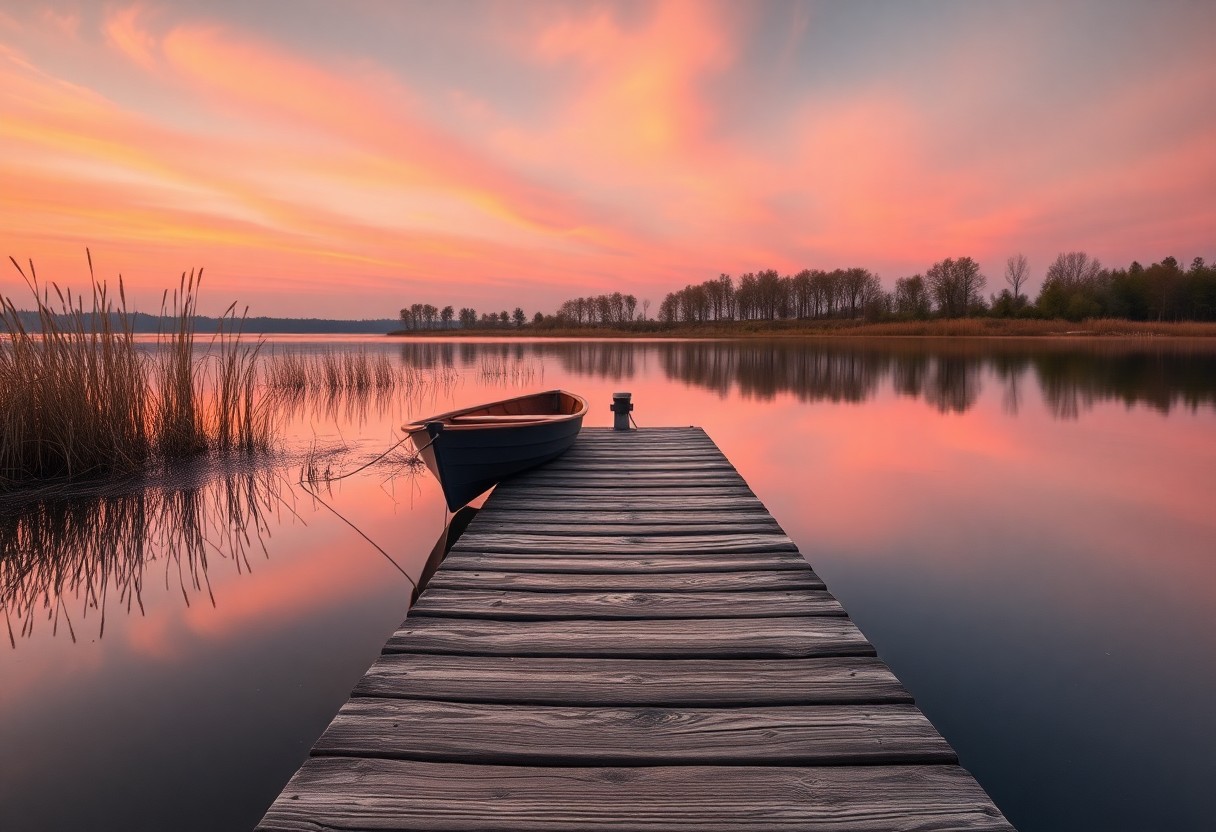
This guide shows you how to enjoy lakeside evenings safely: pack a charged flashlight and wear a lifejacket; avoid cold water and slippery banks; savor golden sunsets and a gentle breeze.
The Peace of Lakeside Evenings
Evenings settle over shorelines where you can distinguish distinct glacial basins and broad freshwater reservoirs, each hosting its own biodiversity and hazards. You notice pockets of rapid runoff and quieter coves suited for gentle recreation.
- glacial
- freshwater
- biodiversity
Across these types you will weigh seasonal risks like sudden storms against benefits such as abundant birdlife. After assessing hazards and amenities, you choose appropriate timing and gear.
| High-Altitude Glacial Basins | Cold, clear water; steep shores; avalanche risk |
| Lowland Freshwater Reservoirs | Warm, rich biodiversity; pollution and algal bloom risk |
| Oxbow and Backwater Lakes | Slow flow; high sediment and plant cover; wildlife refuges |
| Eutrophic Ponds | High nutrients; frequent algal blooms; reduced oxygen |
| Coastal Lagoons | Brackish influence; tidal exchange; variable salinity |
High-Altitude Glacial Basins
Snowmelt supplies crisp, low-nutrient water to these basins, and you face steep approaches and thin air; strong storms and late-season ice shifts raise the safety stakes, so you pack accordingly.
Lowland Freshwater Reservoirs
Shallow waters warm quickly, supporting dense plant life and abundant fish, while you must monitor for elevated pollution and frequent algal blooms that limit safe recreation.
Stability of managed levels makes these sites ideal for boating and trails, but you stay alert for invasive species and follow advisories to protect local biodiversity.
Key Factors Defining Evening Serenity
- soft light
- still water
- wildlife calls
- cool breeze
Vista along the bank shows how soft light and still water combine to calm you, filtering distant noise and sharpening small movements you can follow. Watch for slippery banks near the water’s edge because that danger can abruptly break the calm you seek.
Shoreline scents and temperature shifts tell you whether the evening will hold its hush or stir; clear air enhances reflections while haze blurs them, so you learn to prefer conditions that enhance your sense of space and safety.
Atmospheric Clarity and Light Diffusion
Sky clarity governs how you read depth and color, and when the air is crisp you notice crisp reflections on the lake that heighten calm; when light diffuses through thin cloud you feel a gentler, more enveloping hush that soothes you.
Crepuscular Rhythms of Local Fauna
Dusk brings predictable shifts in calls and movement so you can anticipate patterns; hearing the first sharp calls cues you to settle and observe rather than startle, while subtle rustles remind you of nearby life.
Birds and small mammals time their activity to the fading light, and you learn which sounds mean harmless activity and which indicate nocturnal predators moving in, allowing you to adjust your position and attention.
Any change in those rhythms signals you to reassess noise levels, light, and footing so you maintain both appreciation and personal safety.
The Peace of Lakeside Evenings
| A Step-by-Step Guide to the Lakeside Experience | |
|---|---|
| Plan | Check sunset times, weather, and local regulations; choose shorter visits to limit disturbance. |
| Pack | Bring layered clothing, a red-light headlamp, binoculars, and a small first-aid kit. |
| Approach | Use durable paths, avoid trampling vegetation, and enter from a concealed point to keep noise low. |
| Observe | Stay still, keep lights minimal, and prioritize species safety over photo opportunities. |
Guide your evenings by following the table steps to reduce impact and increase sightings; plan short stays near durable surfaces and avoid walking on fragile shoreline vegetation to prevent erosion.
Scouting Optimal Locations for Seclusion
You should scout during daylight to note hidden inlets, wind-sheltered coves, and safe entry points; mark routes that keep you off private land and away from nesting areas to maintain quiet access.
Establishing a Low-Impact Observation Point
Position yourself several meters back from the waterline on rock, sand, or compacted ground so you do not disturb riparian plants; set gear low and colors muted to reduce attention from wildlife.
Set seating low to the ground, avoid bright headlamps and use a narrow red beam if needed; keep movements slow and voices low-avoid bright lights and keep noise below conversation level to prevent startling animals.
The Peace of Lakeside Evenings
Practice a brief breath anchor each evening so you bring your attention to the present; focus on the rhythm and the lake’s hush to strengthen mindfulness and calm.
Use tactile cues-feet on the ground, palms open-to reconnect when thoughts drift.
- Close your eyes and count five breaths.
- Scan for three sounds, two colors, one scent.
- Sit with a steady posture for two minutes.
After you pause, name three sounds and three sights to root your focus.
Quick Tips
| Action | Why |
| Breath anchor | Calms attention |
| Tactile cue | Returns you to the body |
Auditory Focus and Visual Grounding Techniques
Listen for layers-water lapping, wind through reeds, distant birds-and let each sound anchor your awareness while your eyes trace shapes and colors to build auditory and visual stability for your practice.
Techniques
| Technique | How to practice |
| Sound labeling | Name each sound to slow thought |
| Color scan | Note dominant hues to ground vision |
Essential Equipment for Temperature Regulation
Bring a lightweight insulated layer and a windproof shell so you manage chills and reduce cold exposure; keep spare socks and a dry bag to protect against dampness and hypothermia.
Equipment
| Item | Purpose |
| Insulated jacket | Retains body heat |
| Windproof shell | Blocks chill |
| Dry bag | Keeps layers dry |
Consider choosing moisture-wicking fabrics and testing layers before dusk so you know how long each piece keeps you comfortable; treat wet items promptly to avoid dangerous cooling.
Care Tips
| Item | Maintenance/Note |
| Socks | Keep a dry pair accessible |
| Jacket | Air out and dry after use |
The Peace of Lakeside Evenings
Choosing where you spend lakeside time means weighing access against solitude; the brief notes and table below help you compare common trade-offs so you can pick what suits your plans and safety needs, especially when safety or quiet matter most.
Pros and Cons of Various Waterfront Locations
| Pros | Cons |
|---|---|
| Easy access and parking | Crowds and noise |
| Lifeguards and patrols | Fees or restricted hours |
| Maintained trails and facilities | Limited wilderness feel |
| Good fishing spots | Overfishing or pollution |
| Boating and rentals available | Wake erosion and congestion |
| Reliable sunset views | Insects and shore humidity |
| Wildlife viewing opportunities | Unpredictable animal encounters (dangerous) |
| Family-friendly amenities | Parking shortages at peak times |
Benefits of Managed Recreational Areas
Within managed sites you find predictable support that makes planning easier: lifeguards, clear signage, restrooms, and routine maintenance let you relax and focus on evenings without constant worry about basic needs.
Challenges of Unspoiled Wilderness Sites
Remote locations reward you with solitude but require self-sufficiency; you must carry water, shelter, and a reliable light source because services and help are distant.
Exposure to unpredictable weather and hidden hazards like unmarked cliffs or sudden floods raises your risk, so you should travel with a partner and carry emergency gear.
Because cell service may be absent, bring maps, a compass, and a first-aid kit; encountering wildlife or poisonous plants can become dangerous if you are unprepared.
Conclusion
On the whole, you find lakeside evenings restore clarity and calm as quiet water, soft light, and steady breeze anchor attention and soothe the nervous system. You can adopt short, regular visits or mindful observation to reduce stress, sharpen perspective, and sustain a more balanced daily rhythm.