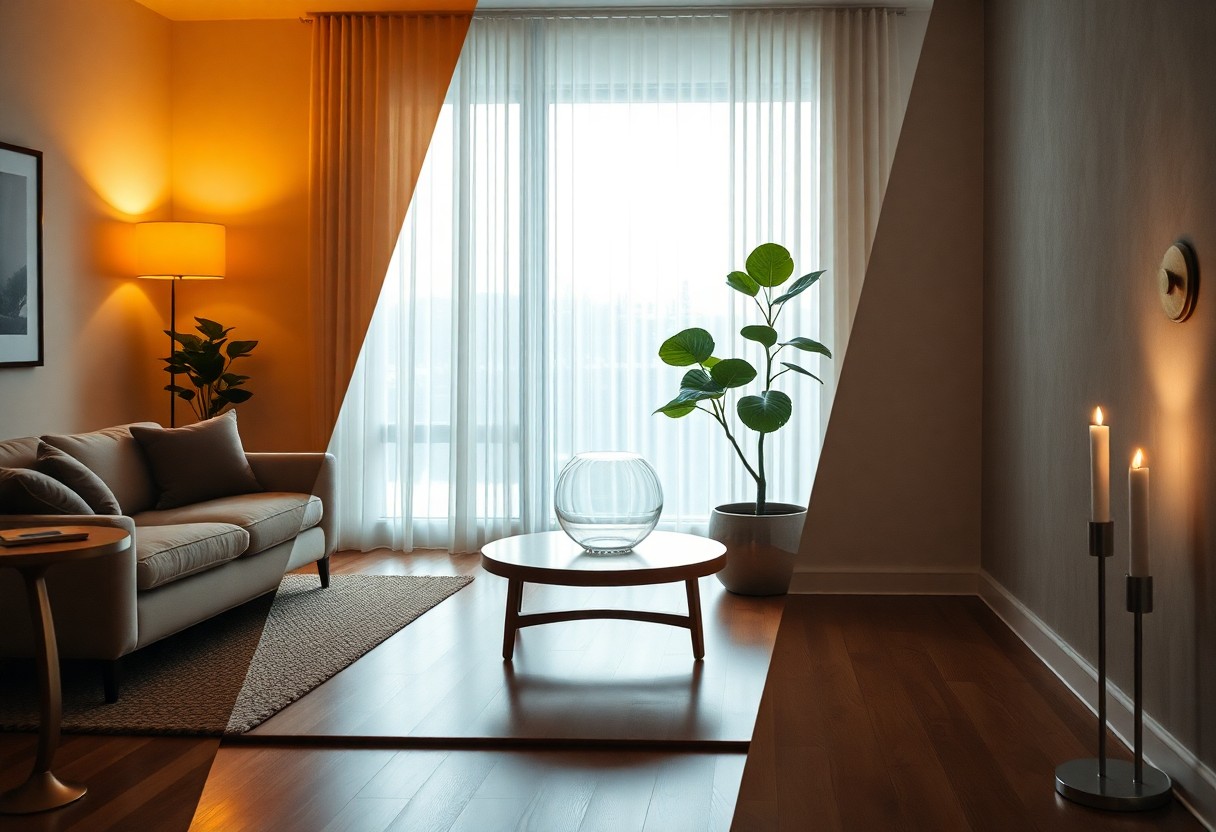
Many people overlook how light shapes your space: use warm tones to create comfort, avoid glare that causes eye strain, and layer fixtures to control mood for each activity.
Core Types of Residential Lighting
| Ambient | General illumination that sets overall mood. |
| Task | Focused light for activities; reduces eye strain. |
| Accent | Highlights features with directional beams. |
| Decorative | Fixtures that add style and personality. |
| Natural | Daylight that shifts tone and energy use. |
- Ambient lighting
- Task lighting
- Accent lighting
- Decorative lighting
- Natural light
Ambient lighting for general atmosphere
Ambient lighting gives you a uniform base layer that defines a room’s feeling without drawing focus; dimmable overhead fixtures and warm temperatures help create a comfortable background.
Task lighting for functional clarity
Task lighting places bright, focused illumination where you work, cook, or read so you can see details and reduce mistakes.
Practical choices such as adjustable arms, directional LEDs, and proper beam angles minimize glare and limit heat near work surfaces.
Accent lighting for architectural focus
Accent lighting guides your eye to texture, art, or structural lines using controlled beams to add depth and intentional contrast.
Architectural fixtures like spotlights, track heads, and concealed uplights create focal points while letting you control brightness and shadow for dramatic effect.
Any balanced mix of these types lets you tune mood, function, and safety throughout your home.
Essential Factors Affecting Room Ambience
- Color temperature
- Lumen intensity
- Beam angle
- Fixture placement
Lighting choices shape how you perceive space: layered sources and dimming let you switch between cozy and productive moods while reducing glare and visual fatigue.
Balance between brightness, warmth, and direction determines comfort and function. Thou should layer ambient, task, and accent lights to match activities.
Understanding color temperature and Kelvin scales
Color influences emotion: you feel relaxed with warmer tones and alert with cooler tones, so use Kelvin values to match each room’s purpose.
Kelvin Guide
| 2700K-3000K | Warm, relaxing – living rooms, bedrooms |
| 3500K-4100K | Neutral, focused – kitchens, bathrooms |
| 5000K+ | Cool, alert – task areas, workshops |
The impact of lumen intensity on psychological comfort
Lumen output affects mood and eye comfort, so you should aim for appropriate lux levels per activity rather than maximizing brightness indiscriminately.
Intensity that is too high can create stress and glare, while too low undermines safety and focus; you can use dimmers to tune scenes and protect circadian rhythms.
Beam angles and light distribution patterns
Beam width determines focus: narrow beams accent objects, while wide beams deliver even ambient light, so you must choose angles to avoid hotspots and shadows.
Distribution that blends focused and broad patterns helps you control attention and perceived room size; use adjustable fixtures to refine coverage.
Pros and Cons of Modern Light Sources
| Pros | Cons |
|---|---|
| Long lifespans reduce replacements | Higher upfront purchase price |
| Low energy consumption | Compatibility issues with old fixtures |
| Wide color and tunability | Blue-rich light can affect sleep |
| Dimmable and instant on | Some models flicker or require drivers |
| Smart integration and automation | Privacy and security concerns |
| Reduced maintenance costs | E-waste and recycling needs |
| Improved directionality for task lighting | Variable color rendering between brands |
Energy efficiency vs. initial cost of LED systems
LEDs give you exceptional energy savings and long service life, so your monthly bills drop and maintenance is minimal.
Initial costs can deter you, since high-quality fixtures or drivers add expense; evaluate total ownership because operational savings often recoup the investment within years.
Warmth and limitations of traditional incandescent bulbs
Incandescent bulbs deliver warm, flattering light that makes rooms feel cozy, so you may prefer them for living areas and mood lighting.
Warmth comes at the cost of high heat output and poor energy efficiency, meaning you’ll pay more to run them and replace them more often.
Because of the heat, place incandescent fixtures away from fabrics and enclosed fittings to reduce fire risk, and consider LEDs where energy and safety matter most.
Versatility and connectivity of smart lighting solutions
Smart systems let you create scenes, schedule lights, and control colors so you can tailor ambiance to activities and time of day.
Connectivity adds convenience but exposes you to network outages and potential privacy issues; secure your setup and keep firmware updated to reduce risks.
Control via apps and voice assistants allows automation that saves energy and enhances security-use routines to simulate occupancy and reduce wasted lighting when you’re away.

Expert Tips for Layering Light in Every Room
Layering light lets you shape mood and function: combine ambient, task, and accent layers so you control brightness and focus in each space while avoiding harsh contrasts.
Mix fixture types and finishes to add texture and guide the eye; use dimmers and directional fittings to cut glare without losing useful light.
- Layering light: ambient, task, accent
- Natural light: windows, skylights, seasonal shifts
- Dimmers: mood control and energy savings
- Floor lamps & table lamps: targeted illumination
Balancing natural light with artificial sources
Balance incoming natural light with warm artificial sources so you preserve color and consistency as daylight changes; you can use sheer curtains and layered fixtures to soften extremes.
Using dimmers to transition between moods
Use dimmers to move from active to relaxed settings: you can lower intensity for evening calm and raise it for tasks, extending bulb life and reducing disruptive glare.
Adjust wiring and pick dimmers rated for your bulbs to prevent flicker and overheating; you should program scenes or presets to match routines and save you time.
Strategic placement of floor and table lamps
Place lamps to fill shadowed corners and create seating pools; you should aim light toward walls or ceilings to produce soft ambient bounce and avoid direct beams in eyes.
Any tall floor lamps behind seating and small table lamps near tasks let you layer practical and decorative light while sculpting atmosphere.
Step-by-Step Guide to Crafting a Lighting Plan
| Step | Why it matters |
|---|---|
|
Plan each room by listing activities and peak usage times, then map lighting layers: ambient, task, accent so you can target needs precisely. You should specify dimmable ambient lighting to shift mood and control brightness for varied occasions. |
Balance light temperature and intensity to set warmer tones for relaxation and cooler light for work, and you can group switches into zones for flexible control. Use glare-free fixtures near screens and seating to protect eyes. |
Identifying the primary function of each living space
Assess each room’s main use and secondary activities so you allocate proper lighting layers, and you can note seating, work areas, and traffic paths to guide placement. Prioritize task lighting where precision matters and softer ambient light where you unwind.
Selecting fixtures based on ceiling height and room size
Measure ceiling height and room footprint before you choose fixtures; low ceilings call for flush or semi-flush mounts while tall spaces can support pendants or chandeliers. Check clearance above walkways and seating to avoid collisions.
Choose fixture size with simple formulas-add the room’s length and width in feet to estimate chandelier diameter in inches and base pendant drop on ceiling height, and you can mock scale with cardboard cutouts to confirm proportion.
Hang fixtures so the bottom clears about 7 feet in circulation zones and sits 30-36 inches above dining surfaces; you should use multiple fixtures in large rooms to provide even illumination rather than one overpowering source.
Coordinating hardware finishes with interior decor
Match primary hardware finishes to nearby metals like door handles and faucets so you create visual cohesion, and you can introduce a single contrasting metal for interest. Favor durable finishes in high-touch areas.
Polish and satin surfaces reflect light differently, so you should view finish samples in the room at various times to see how they read under your lighting and avoid unexpected color shifts.
Finish selection should consider scale: you might choose darker finishes to ground large fixtures and brighter metals to make small fixtures pop, and you should place samples in situ to judge warmth under your chosen bulbs.
Summing up
Drawing together, you see how lighting-brightness, color temperature, and direction-shapes atmosphere, focus, and emotion in every room. Use dimmers, layered fixtures, and natural light to tailor ambiance for work, rest, or entertaining. Small adjustments to shadow and warmth give you immediate control over mood and perception of space.