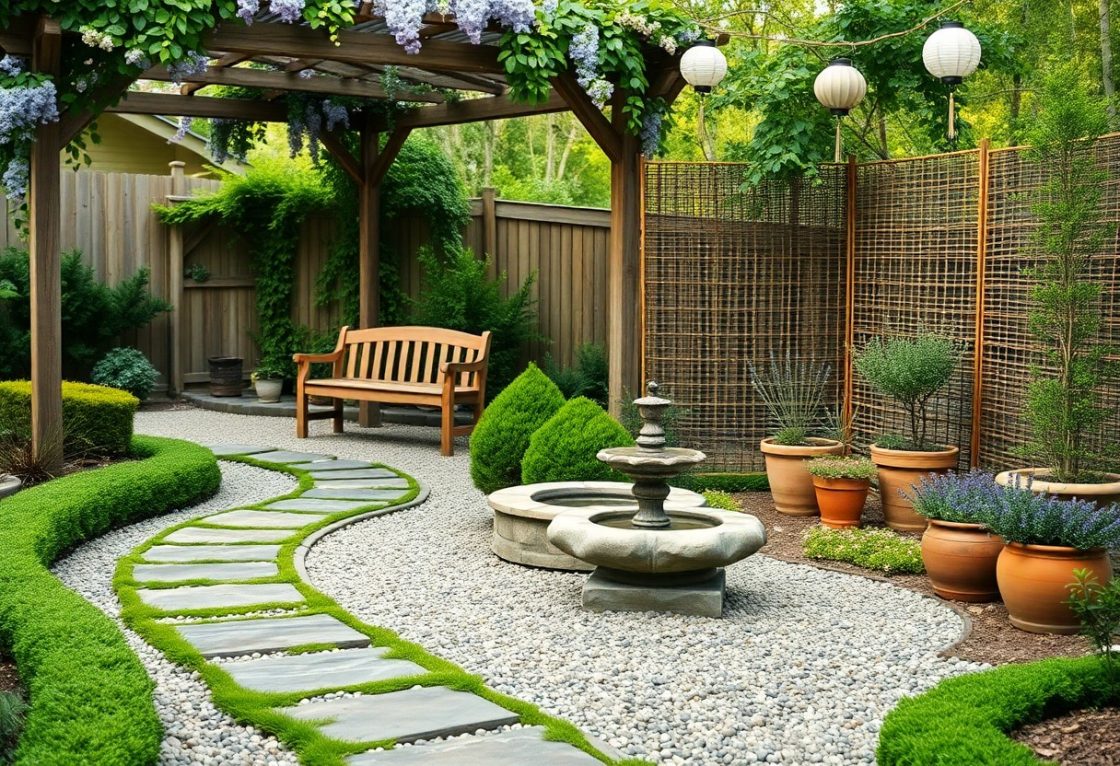

You slow your pace, practice quiet observation, and spot pollinators; watch for slippery paths and ticks while enjoying the mood-boosting calm that regular mornings provide.
Diverse Garden Types for Morning Reflection
Mornings reveal how different garden types shape your quiet rituals, from contemplative stone paths to vibrant flower borders where you pause with tea. The table below outlines five styles and how each helps you draw breath and turn attention inward.
- English Cottage Garden
- Minimalist Zen Garden
- Mediterranean Courtyard
- Native Wildflower Meadow
- Formal Rose Garden
| English Cottage Garden | You lean into scent and texture; abundant blooms invite lingering, but tend thorns carefully. |
| Minimalist Zen Garden | You follow raked lines and quiet shapes; raked gravel steadies breath and sight. |
| Mediterranean Courtyard | You seek warm light and citrus perfume; sunny seating favors slow reading. |
| Native Wildflower Meadow | You watch pollinators move; seasonal variety keeps mornings fresh and surprising. |
| Formal Rose Garden | You practice careful observation; structured paths focus your steps and attention. |
The Sensory Appeal of English Cottage Gardens
Fragrant blooms and layered textures invite you to engage closely, brushing petals and inhaling complex scents; abundant blooms provide a comforting visual chorus while hidden thorns require gentle care.
Achieving Stillness in Minimalist Zen Spaces
Clean geometry and sparse planting direct you to a single point of focus, where raked patterns and clipped evergreens help you slow movement and steady breathing; raked gravel amplifies small gestures.
Balance arises when you limit objects and attend to negative space, so you notice light, shadow, and the slight sound of wind; single focal stone supports short sits and silent observation.
Critical Factors for a Tranquil Outdoor Atmosphere
Morning light and careful placement set the tone, so you orient seating to catch gentle sun and shelter from wind while preserving privacy; you should also note slippery paths after dew as a clear danger and add non‑slip surfacing to protect guests.
Slow routines in the garden ask you to plan for seasonal shifts, choosing plantings that offer soothing scent and sound without heavy chemical use; you can favor native species to reduce maintenance and support wildlife.
- morning routine
- natural light
- sunrise orientation
- soundscaping
- fragrance planting
- tranquil atmosphere
Optimizing Natural Light and Sunrise Orientation
Position seating and focal points to face the sunrise so you capture early warmth and the soft colors that make mornings feel restorative, while keeping screens and reflective surfaces angled away from glare.
Angle garden paths and pergolas to admit light when you use the space most, and use deciduous trees for summer shade that still allows sunrise access in cooler months to extend comfortable hours outdoors.
Incorporating Auditory and Olfactory Elements
Balance water features, bird‑attracting shrubs, and subtle wind chimes to mask distant traffic and deliver constant soothing sounds, placing louder elements away from sleeping areas to avoid disturbance.
Layer fragrant herbs and shrubs near seating and pathways so you experience scent without overwhelming pollen; you should avoid pesticides that release harmful chemicals and choose low‑allergy varieties where possible.
After you test combinations at different times, note when scents peak and which sounds calm you most, then tweak plant placement and feature volume to minimize allergens and maximize comfort for everyone using the space.
The Beauty of Slow Mornings in the Garden
| A Step-by-Step Guide to the Mindful Morning Routine | |
|---|---|
| 1. Grounding | Stand barefoot, breathe, note scent and sound |
| 2. Slow beverage | Prepare tea or coffee outdoors; attend to aroma and temperature |
| 3. Gentle tending | Water, prune, observe without rushing |
| 4. Quiet reflection | Sit, journal, choose one clear task |
Begin with a few slow breaths while you feel the soil or grass beneath your feet; you let attention settle and notice birds, wind, and scent. Reduced stress follows when you shift from doing to sensing, and you carry that calm into the day.
Set a single intention for the hour-one small task and one moment of stillness; you avoid overloading your routine and plan shade or a hat to avoid sun exposure. This focus sustains a calm focus through your chores.
Initial Grounding and Sensory Awakening
Step barefoot onto cool earth and scan the garden with your hands and eyes; you notice textures, moisture, and scent changes. Keep an eye down to watch for thorns as you move so comfort stays first.
Close your eyes for three measured breaths and listen for distant wings and water; you use sound to anchor attention and that practice calms the nervous system, easing you into mindful action.
The Ritual of Slow Beverage Preparation Outdoors
Let the kettle come to temperature while you set your cup and spoon outside; you attend to steam, aroma, and safe handling of hot water so the pause remains restorative rather than risky.
Sip slowly and inhale between sips, noting light and flavor shifts; you turn a simple drink into a mindful pause that trains you to measure attention as carefully as steep time.
Practical Tips for Enhancing Your Garden Experience
Morning pauses let you align small tasks with leisure: tidy paths, check soil, and listen for bird activity so the pace stays gentle. Let slow mornings in the garden be about intentional care, subtle observation, and preserving quiet time.
- slow mornings
- garden
- all-weather comfort
- seating
- seasonal adjustments
- year-round enjoyment
Selecting All-Weather Comfort and Seating
Choose materials that dry quickly and resist mildew, and prefer ventilated frames to avoid trapped moisture; you will limit wear and maintain comfort. Store cushions during heavy storms and use waterproof covers to extend usable mornings.
Seasonal Adjustments for Year-Round Enjoyment
Layer textiles and plant placements so you can adapt to cooler mornings: insulated throws, windbreaks, and sun-facing seats increase warmth and comfort while protecting tender plants from frost.
Any extra prep-mulching, moving containers to sheltered spots, and adding low-level lighting-helps you keep mornings pleasant through cold snaps and reduces risk of plant loss.
Pros and Cons of a Dedicated Morning Garden Practice
Morning rituals in the garden give you a quiet window to set intention, tune your senses, and perform light exercise that lowers stress. You will notice reduced cortisol and clearer focus when you make time for these calm activities.
Pros and Cons
| Pros | Cons |
|---|---|
| Peaceful start to the day | Requires a regular time commitment |
| Gentle physical activity | Early-morning cold or wet conditions |
| Sensory engagement and mindfulness | Exposure to pollen and allergies |
| Boosted mood and clarity | Potential for back strain or tool injuries |
| Improved plant care outcomes | Weather-dependent results |
| Low-cost, flexible practice | Occasional pest or pet damage |
Measurable Benefits for Mental and Physical Health
Studies show that short, consistent gardening sessions can lower markers of stress and improve mood; you may experience better sleep and enhanced concentration after a few weeks. You will also get light aerobic activity that supports circulation without intense strain.
Many participants report measurable drops in blood pressure and improved well-being scores when morning garden time becomes routine. You should track simple metrics like mood, resting pulse, and sleep quality to see tangible progress.
Addressing Time Constraints and Environmental Variables
Short sessions of 10-20 minutes let you maintain a morning practice even on busy days; you can focus on priority tasks like watering, pruning, or observing pests. You will conserve momentum without needing long blocks of time.
Practical adjustments-such as container gardening, frost covers, or plant selection-help you continue through variable weather; you should plan alternatives like indoor seed-starting for very cold spells. Keep safety gear and sun protection handy to reduce risks.
Try scheduling specific, repeatable actions and create a simple checklist so you waste less time deciding what to do; you will find consistency builds benefits while minimizing disruption to your day.
Summing up
As a reminder, you soak in quiet, observe light shifting across petals, and tune your attention to small rhythms that steady the mind. Slow mornings in the garden teach you how to prioritize presence, improve focus for the day, and cultivate patience through simple sensory practice.