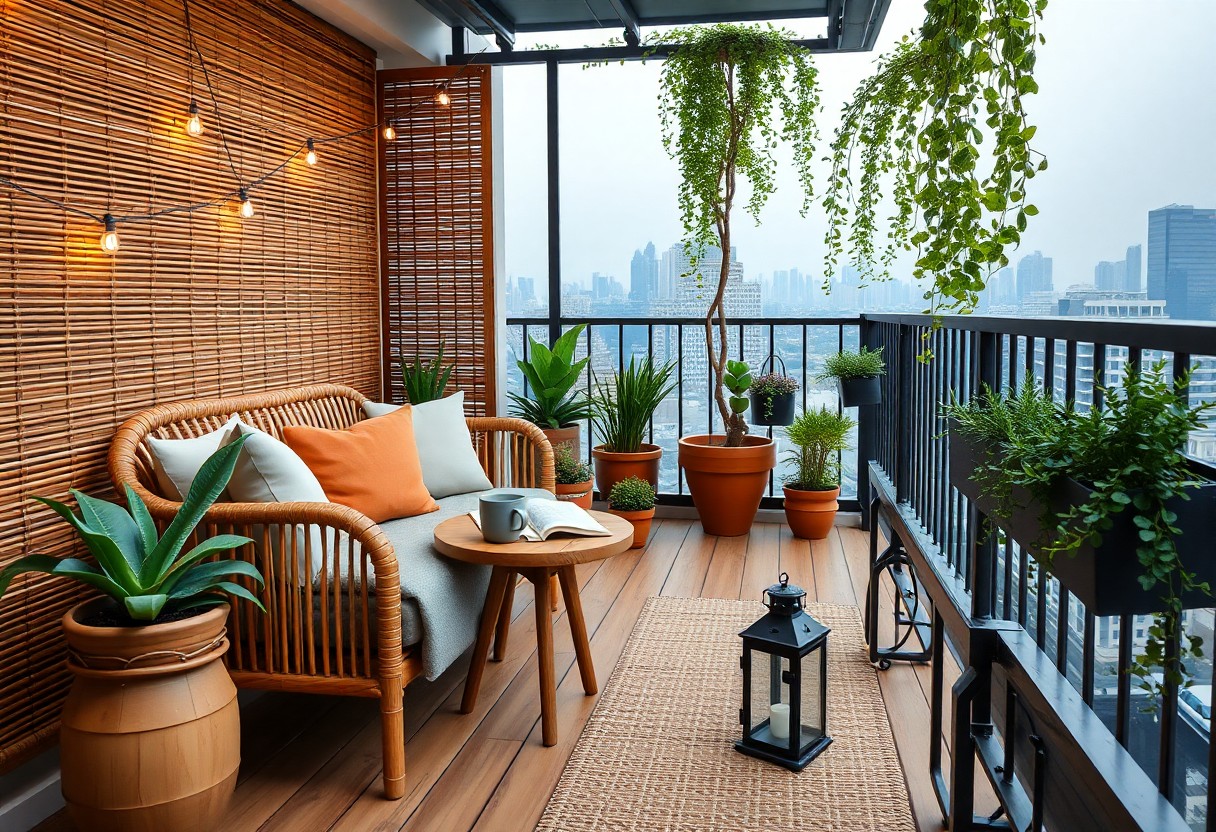
You can transform your balcony into a private retreat by prioritizing secure railings and strict weight limits, selecting weatherproof, space-saving furniture, and adding privacy screens and lush plants for cozy, calming comfort.
Evaluating Your Space: Key Factors for Success
Assess your balcony’s usable area, access, and privacy to prioritize placement and circulation. Sketch simple zones for seating, planting, and storage to visualize flow.
- Weight capacity: check load limits
- Sunlight exposure: note daily patterns
- Safety: review railings and exits
Check your building rules and neighbor sightlines before making changes. Thou consult a structural pro when plans add significant weight.
Assessing Structural Weight Capacity and Layout
Calculate the balcony’s load capacity from building specs and visible supports; you may need an engineer for heavy furnishings or soil-filled planters. Arrange furniture to spread weight and keep heavy items away from edges to protect safety.
Analyzing Sunlight Exposure and Microclimates
Map sunlight patterns across morning and afternoon to choose appropriate plants and shade solutions; you should record at different times and days to capture variation in sunlight exposure.
Track reflected heat from nearby buildings and prevailing winds that create distinct microclimates, since these affect watering schedules and material choices for furniture and plant containers.
Observe seasonal shifts by testing with potted plants to see how shade and heat alter growth and comfort, then adjust placement and plant selections accordingly.
Selecting Your Aesthetic: Popular Balcony Retreat Types
| Minimalist Zen Sanctuary | Neutral palette, low-profile furniture, uncluttered sightlines |
| Lush Urban Jungle | Vertical planters, layered foliage, attention to weight and drainage |
| Bohemian Cozy Nook | Textiles, mixed seating, eclectic accents |
| Mediterranean Terrace | Sun-loving pots, warm hues, durable materials |
| Outdoor Dining & Lounge | Compact dining sets, weatherproof fabrics, ambient lighting |
- Minimalist Zen
- Lush Urban Jungle
- Vertical Garden
The Minimalist Zen Sanctuary
Calm you maintain a serene balcony by choosing a muted palette, simple planters and low-profile furniture that keeps views open. You should keep decor intentional, store extras off-site, and monitor balcony weight limits to avoid structural hazards.
Lush Urban Jungles and Vertical Gardens
Green you build depth with stacked planters, trellises and hanging pots, prioritizing lightweight containers and breathable soil mixes. You must install proper waterproofing and drainage and consider irrigation to prevent overwatering and mold.
The planning includes selecting low-maintenance species, securing railings and anchors, and calculating added load from saturated soil as a safety concern.
Essential Design Tips for Maximizing Small Areas
Small balconies work best when you prioritize privacy and space-saving solutions: foldable seating, slim planters, and layered lighting keep flow and function without clutter.
- Vertical space: mounted planters and trellises
- Weather-resistant foldaway furniture for year-round use
- Balcony mirrors and rugs to broaden perception
Optimize the layout by keeping clear pathways and choosing low-profile pieces; you should avoid heavy clusters on rail edges to prevent structural stress.
Utilizing Vertical Space for Privacy and Seclusion
Hang trellises, bamboo screens, or outdoor curtains to build a green wall that shields views while preserving floor area; you can train climbers or stack planters to add depth, but keep loads within weight limits to avoid failures.
Choosing Weather-Resistant Multi-functional Furniture
Select pieces made from weather-resistant materials like powder-coated aluminum, teak, or synthetic wicker and prefer items that double as storage or fold flat to create space-saving solutions.
Consider anchoring tall units and choosing quick-dry cushions with removable, UV-resistant covers so you avoid mold and rust, and you keep maintenance simple.
Perceiving fabric ratings and hardware quality helps you choose low-upkeep pieces: inspect seams, zippers, and joinery each season, and store cushions during storms to reduce wear and mold risk.
Step-by-Step Transformation Guide
Begin by mapping the sequence: safety check, surface prep, flooring, lighting, furnishings, and privacy screening. You should verify structural limits and weight capacity before adding heavy planters or furniture.
| Phase | Key Actions |
|---|---|
| Assess safety | Inspect railings, drains, and supports; note weight limits |
| Surface prep | Clean, repair cracks, ensure drainage, apply waterproof membrane |
| Flooring | Install weatherproof, slip-resistant tiles or composite decking |
| Lighting & decor | Fit low-voltage LED, waterproof fixtures; secure cords and hanging pieces |
| Furnish & privacy | Choose lightweight furniture, add anchors for screens and vertical planters |
Surface Preparation and Flooring Installation
Check for loose rails, hairline cracks, and ponding; patch concrete and seal drains so water flows away. You must address any structural concerns and consult a pro if you find rusted supports or sagging.
Lay an underlayment when required and pick waterproof, slip-resistant materials like composite decking or lightweight tiles to keep load low. You should maintain a slight slope for drainage and avoid adhesives that trap moisture.
Integrating Ambient Lighting and Decor Elements
Choose low-voltage LED fixtures and outdoor-rated string lights, and set timers or dimmers to control energy and mood. Place fixtures clear of fabrics and plants and opt for fire-safe, waterproof options.
Balance task, accent, and ambient lighting so you can read, dine, and relax without glare; layer rugs, cushions, and planters to create intimacy and privacy. You will want corrosion-resistant hardware to secure items against wind.
Protect wiring with weatherproof conduit and use GFCI outlets; hire a licensed electrician for permanent installs to avoid shock and code violations. You should test all fixtures after installation and secure connectors with waterproof fittings.
Weighing the Investment: Pros and Cons of Balcony Upgrades
You will need to balance upfront costs, permit requirements and the expected lifestyle gains; small changes can be low-cost while structural work demands professional assessment and a larger budget.
| Pros | Cons |
|---|---|
| More usable outdoor space for relaxation and dining | Upfront installation and material costs |
| Enhanced privacy and comfort | Possible need for permits or HOA approval |
| Higher property value and market appeal | Structural weight limits can restrict designs |
| Design flexibility: screens, planters, seating | Ongoing maintenance and repair expenses |
| Year-round use with covers or heaters | Weather exposure increases wear and risk of water damage |
| Better rental or resale attractiveness | Neighbor or building restrictions may apply |
Enhanced Living Quality and Property Value
Adding plants, seating and lighting lets you reclaim the balcony as a true outdoor room, so you can enjoy fresh air and quiet without leaving home; small comforts often deliver big daily benefits.
Upgrades like durable decking, glass railings or sheltering awnings can boost curb appeal and, in many cases, increase resale value, helping you recover part of the cost when you sell.
Ongoing Maintenance and Structural Limitations
Expect to schedule periodic sealing, fastener checks and surface repairs, because neglect can lead to rot, corrosion and safety hazards that demand costly fixes; you should factor these into the lifecycle cost.
Regularly inspect railings, drainage and attachment points, and consult an engineer if you notice sagging or cracking, since exceeding load limits or ignoring leaks can jeopardize safety and void warranties.
To wrap up
So you can turn a small balcony into a private retreat by choosing compact furniture, layered lighting, and plants for privacy and sound softening. You should prioritize durable materials, a simple layout that supports relaxation, and small decorative touches that reflect your taste. You should perform regular maintenance to keep the space inviting and ensure long-term comfort.