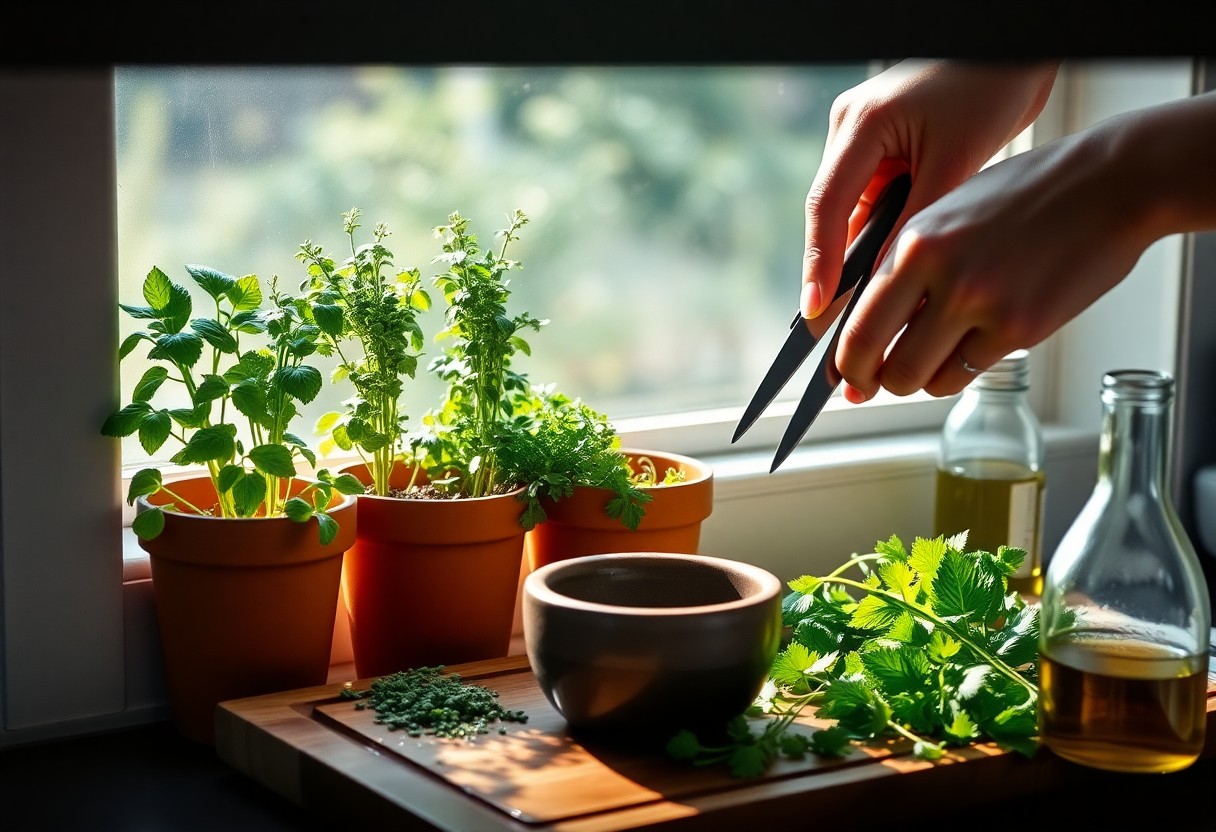
Cooking with homegrown herbs transforms dishes; you learn simple techniques, choose easy, high-impact herbs, and avoid poisonous lookalikes while gaining consistent fresh flavor.

Essential Herb Types for Culinary Excellence
- Basil
- Rosemary
- Thyme
- Mint
- Cilantro
| Basil | You get bright, sweet leaves best used fresh; pinch regularly to encourage peak flavor. |
| Rosemary | You can harvest year-round; woody stems deliver intense aroma-use sparingly to avoid overpowering dishes. |
| Thyme | You benefit from drought tolerance and frequent trimming; dried sprigs keep a long-lasting savory edge. |
| Mint | You must contain it in pots because it’s invasive, though it adds bright, cooling notes. |
| Cilantro | You should sow in succession since it bolts fast, and young leaves give the best citrusy flavor. |
Basil anchors summer dishes and teaches you to pinch young leaves for peak flavor.
Culinary use often favors fresh leaves, so you should harvest in the morning for brighter aroma and quicker flavor release when cooking.
Hardy Perennials for Year-Round Use
Rosemary survives colder months and lets you snip sprigs that deliver concentrated aroma, but use sparingly to avoid overpowering dishes.
Thyme tolerates dry soil and frequent trimming, and you can dry excess stems for stable, long-lasting flavor.
Fragile Annuals for Seasonal Flavor Profiles
Cilantro bolts quickly in heat, so you should sow in waves and pick leaves young for the clean, citrusy notes you want.
Mint offers bright freshness but spreads aggressively, so you must contain roots in pots and harvest often to curb invasiveness.
Thou should stagger sowings and cut seed stalks early to prolong leaf production and keep your seasonal supply steady.
Critical Environmental Factors for Plant Potency
You can boost herb potency by fine-tuning microclimate elements that drive aromatic oils-stable light, consistent temperature, fertile soil and reliable drainage matter most.
- Light intensity and duration
- Temperature day/night balance
- Soil texture, pH and organic matter
- Drainage to prevent root rot
Calibrating Light Exposure and Temperature
Light drives crucial oil synthesis, so you should provide bright, indirect sun for most culinary herbs while avoiding leaf scorch; pair that with daytime temperature in the 65-75°F range and slightly cooler nights to concentrate flavors.
Light & Temperature Guide
| Parameter | Recommendation |
|---|---|
| Intensity | Morning sun or filtered afternoon light for 6-8 hours |
| Duration | Longer days boost growth; shorten slightly before harvest to concentrate oils |
| Day/Night Temps | 65-75°F day, 50-60°F night for most herbs |
| Warning Signs | Leaf burn indicates excess light; limp leaves signal low temps or overwatering |
Optimizing Soil Composition and Drainage
Soil should be loose and well-aerated so you can avoid compacted roots; mix equal parts high-quality potting mix and coarse amendments, add compost for nutrients, and aim for pH near 6-7 to let aromatic oils develop.
The addition of perlite or coarse sand improves drainage and prevents root rot, while regular light top-dressing of compost maintains fertility without waterlogging.
Step-by-Step Guide to Garden Establishment
You should map beds by sun and access, placing sun-loving herbs where they receive at least 6 hours and avoiding low spots prone to standing water.
Plan soil amendments using compost and a well-draining mix, mark zones for herbs with similar moisture needs, and set paths for easy harvest to reduce accidental overwatering.
Quick Steps
| Stage | Action |
|---|---|
| Site selection | Match herbs to sun exposure and airflow |
| Soil prep | Incorporate compost and ensure good drainage |
| Sowing | Sow at recommended depth; label varieties |
| Watering | Water at the base and avoid overwatering |
| Transplanting | Harden off seedlings and plant at correct depth |
| Maintenance | Prune for vigor and harvest regularly |
Seed Starting and Propagation Techniques
Start seeds in a sterile seed mix, keep the medium lightly moist, and use trays with covers; you must avoid damping-off by providing airflow and not overwatering.
Transplanting and Container Selection
Transplanting seedlings when they show two true leaves reduces shock; you should harden them off outdoors over several days to prevent transplant shock.
Select containers with drainage holes and choose pot sizes that match root systems so you can avoid waterlogged roots and frequent repotting.
Consider a lightweight potting mix for containers and place pots where you can control sun and wind; large pots should sit on stable surfaces to prevent tipping that could injure you.
Professional Care Tips for Maximum Flavor
Start timing your harvests and adjusting water and light to intensify oils so maximum flavor develops; you should pick leaves in the morning after dew dries and reduce watering a day before harvest to concentrate aromas.
- pruning
- organic fertilization
- pest management
- maximum flavor
Strategic Pruning to Stimulate Growth
Prune regularly to encourage bushy growth and stronger oils: pinch tips, remove flower stalks, and cut above a leaf node so you stimulate side shoots, and avoid removing more than a third at once because overpruning can shock plants.
Organic Fertilization and Pest Management
Feed with gentle organic amendments like compost, worm castings, or diluted fish emulsion on a light schedule to sustain flavor without excess salts, since overfertilizing can burn roots.
Monitor pests by inspecting leaves weekly, handpicking pests, and treating outbreaks with neem oil or insecticidal soap while you avoid broad‑spectrum pesticides that harm beneficial insects.
Rotate planting locations, add seasonal cover crops, and mulch to improve soil structure and reduce disease pressure. Assume that you prioritize gentle, organic practices and your herbs will deliver more intense, consistent flavor.

Pros and Cons of Indoor vs. Outdoor Cultivation
You will weigh control and convenience against space and cost when choosing where to grow herbs; indoor setups give steady conditions and less weather risk, while outdoor beds often offer bigger yields and richer flavors.
Outdoor plantings expose you to pests, variable weather and seasonal limits, yet they use natural sunlight and rainfall, reducing energy needs and often producing more aromatic herbs.
| Indoor | Outdoor |
|---|---|
| Consistent temperature and light control | Free natural sunlight boosts flavor |
| Year-round harvest with grow lights | Stronger seasonal growth and larger plants |
| Lower exposure to pests and disease | Higher pest pressure and weather risk |
| Smaller footprint suitable for balconies | Requires more garden space |
| Higher upfront costs (lights, trays) | Lower equipment costs, more labor |
| More control over soil and nutrients | Benefits from natural soil ecosystems |
| Ease of access for frequent harvesting | Seasonal downtime during frost |
| Requires electricity and monitoring | Can use rainwater and passive systems |
Controlled Environments and Accessibility
Inside your home you can set light schedules and humidity so you get reliable, consistent harvests that fit your cooking needs, and you avoid many field pests.
Space on a windowsill or shelf lets you place herbs within reach so you use them more often; you can also add portable containers or racks to expand without a full garden.
Natural Resource Benefits and Seasonal Limitations
Sunlight and rain in outdoor beds give you free inputs that enhance aroma and reduce energy costs, so you benefit from natural flavors and lower utility use.
Seasons constrain your choices: you will face frost, heat stress and shorter harvest windows unless you use cold frames or move plants indoors for winter protection.
Water management matters: you can capture rainwater and practice mulching to cut irrigation, but you must avoid overwatering or drought to prevent root rot or water stress that harm yields.
Harvesting and Preservation Methodologies
Harvest herbs when dry and at peak scent, using sharp shears to avoid bruising. You should cut above a pair of leaves to encourage regrowth and limit stress on the plant. Avoid collecting wet material to reduce mold risk.
Store fresh cuttings in a cool, shaded spot and process within hours to preserve oils. You can choose drying, freezing, or making pestos; label batches and note date for proper rotation. Quick processing preserves flavor and potency.
Identifying the Ideal Window for Peak Essential Oils
Watch leaf shine and flower bud formation to time harvests; many herbs peak just before full bloom. You should pick in mid-morning after dew evaporates for higher oil concentration and lower water content.
Smell a crushed leaf to test potency and compare aroma across plants; choose the strongest-scented specimens for immediate use or drying. You can sample small areas so the plant keeps growing.
- You should harvest basil and mint before flowering for the best flavor.
- You should clip rosemary and thyme year-round, favoring new growth for tenderness.
- You should leave a portion of each plant to maintain vigor and future harvests.
Harvest Indicators
| Indicator | Action |
| Leaf shine and firm buds | Cut stems in the morning after dew dries |
| Strong crushed aroma | Prioritize that plant for drying or immediate use |
| Visible wilting or discoloration | Discard or trim to avoid off-flavors |
Advanced Drying and Freezing Techniques
Air-dry in small bundles in a warm, well-ventilated room or use a dehydrator set below 95°F (35°C) to protect volatile oils. You should handle leaves gently and remove any discolored bits to avoid off-flavors.
Freeze herbs rapidly by chopping and packing into oil- or water-filled ice cube trays, then transfer cubes to airtight bags to prevent freezer burn. You can thaw single cubes for cooking without losing aroma.
Technique such as vacuum sealing after drying or flash-freezing minimizes oxygen exposure and maintains aroma; you should use oxygen absorbers for long storage. Low-heat drying and airtight storage can extend usable life by months.
- You should split leaves into small batches for even drying and faster processing.
- You should use parchment or non-stick trays if drying delicate flowers to prevent sticking.
- You should label frozen cubes with herb and date to track freshness.
Dry & Freeze Options
| Method | Tip |
| Air-dry bundles | Hang in small bunches in a dark, ventilated space |
| Dehydrator (low heat) | Set below 95°F (35°C) and check frequently |
| Freezing in oil cubes | Use olive oil to capture oils and prevent freezer burn |
| Vacuum seal after drying | Remove oxygen to preserve aroma and color |
Final Words
As a reminder you can transform meals by growing a few herbs at home. You control flavor intensity, harvest timing, and variety to suit dishes; regular pruning keeps plants productive. Pair basil with tomatoes, rosemary with roasted meats, and mint with desserts for clear results. Dry or freeze surplus to preserve flavor and reduce waste. Small pots or a sunny windowsill give you continuous access to fresh herbs that sharpen your cooking.