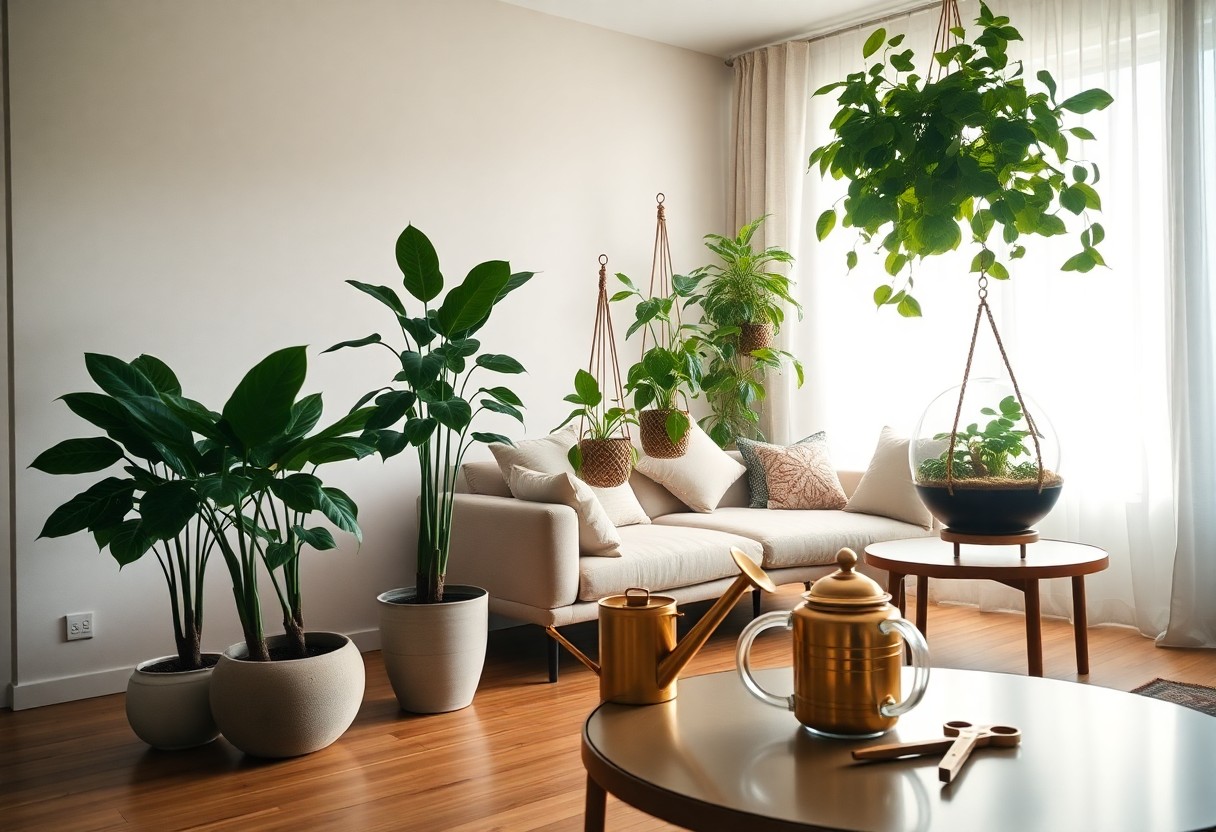
Nature shows you how to bring plants indoors to improve air quality and mood; follow clear guidance on simple care and avoiding toxic plants that can harm pets or children.
Categorizing Indoor Plant Types
Categorization helps you match indoor plants to light, humidity and care needs so you pick what fits your schedule and space. These groups – like low-maintenance, air-purifying, and statement species – guide buying decisions and daily routines.
Grouping also flags toxic species for homes with pets and highlights pet-safe alternatives, allowing you to prioritize size, maintenance level, or visual impact.
| Low-maintenance | Forgiving, low-to-medium light, sparse watering |
| Statement | Large form, needs space and stable light; some are toxic |
| Air-purifying | Removes VOCs, benefits indoor air quality |
| Pet-safe | Non-toxic choices for homes with animals |
| Trailing | Hanging or shelf-friendly, space-saving |
- Match indoor plants to light before purchase
- Prioritize low-maintenance if you travel or keep a busy schedule
- Reserve statement species for areas with room and consistent light
Low-Maintenance Foliage for Beginners
Select resilient choices such as snake plant, pothos, or ZZ plant so you can build confidence with forgiving care and minimal watering. These options suit low-light corners and unpredictable routines.
Many low-maintenance varieties also deliver air-purifying benefits, but you should check toxicity if pets or children roam freely because some common favorites are toxic.
High-Impact Statement Species
Bold species like fiddle-leaf fig and monstera create instant architectural focus and demand consistent light, space, and occasional pruning to thrive.
Dramatic leaves reward the attention with strong visual impact, though you must manage humidity and pests to keep them showing well.
Thou should place these statement species where their scale and light needs match the room, and note that many are toxic to pets-use raised pots or protective barriers to keep animals safe.
Critical Environmental Factors
Plants react to shifts in light, temperature, humidity, and soil, so you should track these variables to keep indoor foliage vigorous.
- Light: intensity and duration
- Temperature: consistent day/night ranges
- Humidity: ambient moisture levels
- Soil & Drainage: structure and runoff
The balance between those elements prevents root rot and supports healthy growth.
Managing Light and Photoperiods
Position your pots where available light matches each species’ needs, since too little slows growth and too much causes leaf burn, and you should adjust placement or use sheer curtains to moderate intensity.
Soil Composition and Drainage Requirements
Choose a potting mix that balances porosity and moisture retention, combining components like peat, perlite, and coarse sand so your roots get oxygen and water without stagnation.
Avoid dense garden soil in containers because poor drainage often leads to root rot, so provide ample holes and a gritty amendment to speed runoff.
Mix coarse materials thoroughly and test by watering fully to confirm excess exits the pot within a few minutes, which ensures proper aeration and reduces the risk of waterlogged roots.
Step-by-Step Planting and Repotting
Preparing the Growing MediumMix fresh potting soil with perlite or coarse sand and a small amount of compost so you create airy, nutrient-rich medium; good drainage prevents root rot. You should moisten the mix until it holds together without dripping. Press the soil lightly into the pot to settle it while avoiding compression, because compacted soil restricts oxygen to roots. You must leave space for the root ball and a thin top layer to water effectively. |
Safe Root Handling and PlacementGently ease the root ball from its nursery pot and tease out circling roots so they can grow outward; do not pull aggressively or you may tear major roots. Avoid tearing to reduce shock. Position the plant so the original top of the root ball sits level with the new soil surface, because planting too deep invites stem rot while planting too shallow stresses roots. You should center the root ball and backfill evenly. Inspect any damaged or mushy roots and trim them with clean shears before planting, then water thoroughly to settle soil around roots; using sterile shears and a good soak helps recovery. |

Pros and Cons of Interior Greenery
Plants bring texture, color, and humidity to your rooms while offering improved air quality and a calmer atmosphere that supports focus and rest. You will notice mood boosts and softer acoustics in busy spaces.
Consider space limits, light availability, and ongoing care when choosing specimens, since some species pose toxicity risks to pets and children and others invite pests or mold if neglected.
| Pros | Cons |
|---|---|
| Improved mood and reduced stress | Requires regular watering and pruning |
| Natural humidity regulation | Can attract insects |
| Visual and textural variety | Some species are toxic to pets |
| Sound dampening in rooms | Needs appropriate light levels |
| Potential VOC reduction | Space and potting needs |
| Biophilic connection indoors | Seasonal care adjustments |
| Improves work and rest environments | Risk of overwatering and root disease |
| Can complement décor and function | Time investment for plant health |
Psychological and Air-Quality Benefits
You will find that having plants reduces perceived stress and increases concentration, making work and relaxation spaces feel more restorative; reduced anxiety is a common report among indoor gardeners.
Studies show that certain species can lower airborne VOCs and particulate matter, so you may notice fresher air and fewer odors when you place plants in key spots; choose varieties known for air filtering for best results.
Common Maintenance and Pest Challenges
Routine care demands include consistent watering, proper drainage, and matching plants to available light, because overwatering often causes root rot that you can avoid with good pots and soil.
Seasonal shifts bring pests and fungal issues; you should watch for aphids, spider mites, and fungus gnats, and adjust humidity, airflow, and watering to reduce outbreaks.
Treat infestations early by isolating affected plants, using mechanical removal, or applying targeted remedies like insecticidal soap; you should avoid broad-spectrum chemicals unless necessary and always remove heavily diseased material promptly.
Essential Maintenance Tips for Longevity
Keep a routine check on light, soil moisture, and ventilation to extend your plants‘ life; you should inspect for pests and root rot signs and act quickly to protect longevity.
- You should avoid standing water to prevent root rot.
- You must use well-draining soil and pots with holes for effective maintenance.
- You can rotate plants regularly for even light and balanced growth.
Precision Watering and Fertilization
Water based on leaf feel and pot weight so you avoid overwatering, which causes root rot; pair measured fertilization with the growing season to encourage healthy growth without nutrient burn.
Seasonal Care and Pruning Techniques
Prune dead or crowded stems in the appropriate season so you improve airflow and reduce disease risk, and always use clean tools to limit spread of pests.
Observe growth cycles and adjust watering and feeds as light and temperature change. The timing of cuts and rest periods supports vigorous returns.
To wrap up
To wrap up, bringing plants indoors improves air quality, reduces stress, and sharpens focus; choose low-maintenance species, match placement to light, and use well-draining soil. You can set a simple watering and pruning routine, check humidity, and rotate pots to maintain vibrant growth and a healthier living space.